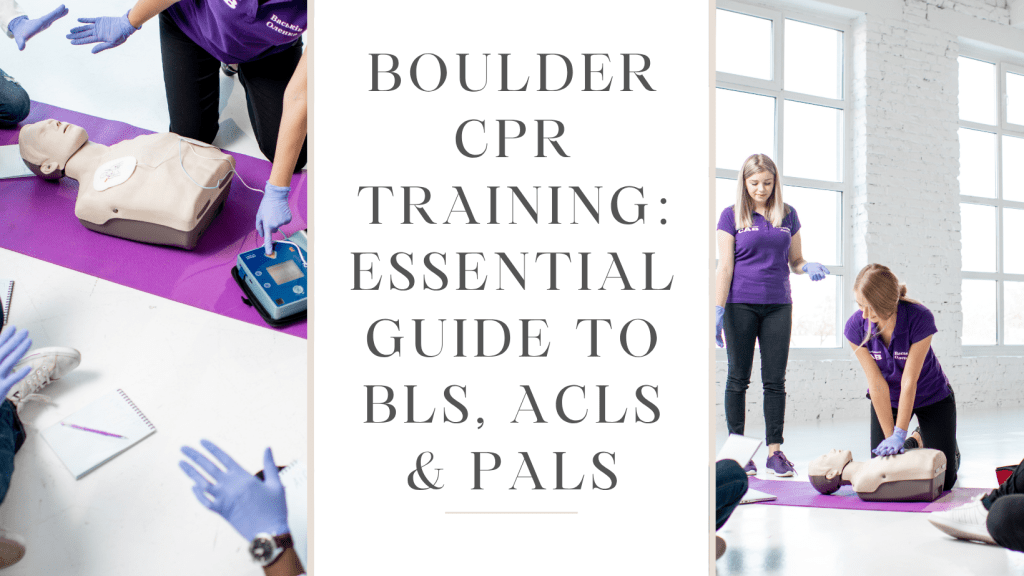
For medical professionals and concerned citizens alike, the ability to act decisively during a crisis is a vital skill. In a city like Boulder, where outdoor adventure and community health go hand in hand, the demand for qualified responders is high. If you are navigating the requirements for your career or simply want to be prepared, finding the right CPR Training in Boulder is the first step.
However, understanding the alphabet soup of medical certifications can be tricky. Different roles require different levels of expertise. This guide will walk you through the key differences between BLS, ACLS, and PALS, ensuring you enroll in the course that fits your specific needs.
Why Local Training Matters
Living in the foothills of the Rocky Mountains means that emergencies can happen anywhere, from a local coffee shop to a remote hiking trail. For healthcare workers, being certified is often a condition of employment, but the quality of that training is what truly counts.
By choosing local CPR Training in Boulder, you gain access to instructors who understand the specific challenges faced by Colorado’s medical community. Local courses offer convenience and relevant scenarios, ensuring you are ready to protect your patients and neighbors when every second counts.
BLS Certification for Healthcare Providers
The starting point for any medical career is Basic Life Support. BLS Certification for Healthcare Providers is distinct from standard CPR classes aimed at the general public. It is designed specifically for professionals such as nurses, doctors, paramedics, and dental staff who work in clinical environments.
This course focuses on the core competencies required to save a life in a medical setting. Participants learn how to perform high-quality CPR on adults, children, and infants, as well as how to operate an AED and manage choking incidents.
A major focus of BLS Certification for Healthcare Providers is the “Chain of Survival” and team dynamics. You will learn how to work effectively with other responders, ensuring seamless care during the critical moments following cardiac arrest. For anyone entering the healthcare field, this certification is the absolute standard.
ACLS Certification for Healthcare Providers
For those working in critical care, emergency rooms, or intensive care units, Basic Life Support is just the beginning. ACLS Certification for Healthcare Providers takes resuscitation skills to the next level. This advanced course is intended for professionals who direct or participate in the resuscitation of patients in hospital settings.
ACLS expands on the fundamentals by introducing medical interventions and pharmacology. The curriculum covers the management of cardiovascular emergencies, including:
- Identifying and treating heart attacks and strokes.
- Managing acute arrhythmias like tachycardia and bradycardia.
- Establishing airways and understanding ACLS algorithms.
Obtaining your ACLS Certification for Healthcare Providers equips you with the knowledge to lead a resuscitation team. It emphasizes not just the mechanics of CPR, but the critical thinking required to diagnose and treat the underlying causes of cardiac arrest.
PALS Certification for Healthcare Providers
Treating pediatric patients requires a completely different approach due to their unique physiology. PALS Certification for Healthcare Providers is designed for medical staff who treat infants and children, such as pediatric nurses, emergency department staff, and paramedics.
The PALS course emphasizes a systematic approach to pediatric assessment. Because children rarely suffer from sudden cardiac arrest in the same way adults do, the training focuses heavily on recognizing the early signs of respiratory failure and shock.
Key elements of PALS Certification for Healthcare Providers include:
- Pediatric assessment techniques.
- Management of respiratory and cardiovascular emergencies in children.
- Effective resuscitation techniques tailored to younger patients.
This certification ensures that providers can respond with confidence and precision when treating the most vulnerable patients.
Finding the Right Course
Choosing the correct certification depends on your professional role:
- General Clinical Staff: Requires BLS Certification for Healthcare Providers.
- Critical Care and Emergency Staff: Often requires ACLS Certification for Healthcare Providers.
- Pediatric Specialists: Must obtain PALS Certification for Healthcare Providers.
When searching for a class, verify that the training center is accredited by the American Heart Association (AHA). This ensures your certification is recognized by employers nationwide. Opting for local CPR Training in Boulder saves you travel time and allows you to learn in a familiar environment.
Get Certified Today
Your ability to respond in an emergency is one of your most valuable assets. Whether you need to fulfill a job requirement or want to enhance your medical knowledge, these certifications provide the skills necessary to save lives.
Don’t leave your preparedness to chance. Invest in BLS Certification for Healthcare Providers, ACLS Certification for Healthcare Providers, or PALS Certification for Healthcare Providers today. Join the ranks of trained professionals keeping the Boulder community safe.
 A Complete Guide to CPR Training and Certification
Leave a comment